The truck waits.
The bills don’t.
Fuel overheads, driver wages and vehicle finance continue between loads. Finding the next job should not be a full-time job.
Idle trucks. Unverified partners. Unclear rates.
South Africa’s mining haulage is fragmented.
We’re here to bring it together.
For a mine, it’s uncertain capacity. For a fleet owner, it’s another day of costs without a load.
Fuel overheads, driver wages and vehicle finance continue between loads. Finding the next job should not be a full-time job.
When introductions move faster than checks, both sides carry uncertainty about who is responsible and who will perform.
Without written load details and payment terms, a movement can begin with different expectations on either side.
Explore the handovers from mine to market. Select a stage to see what has to work.
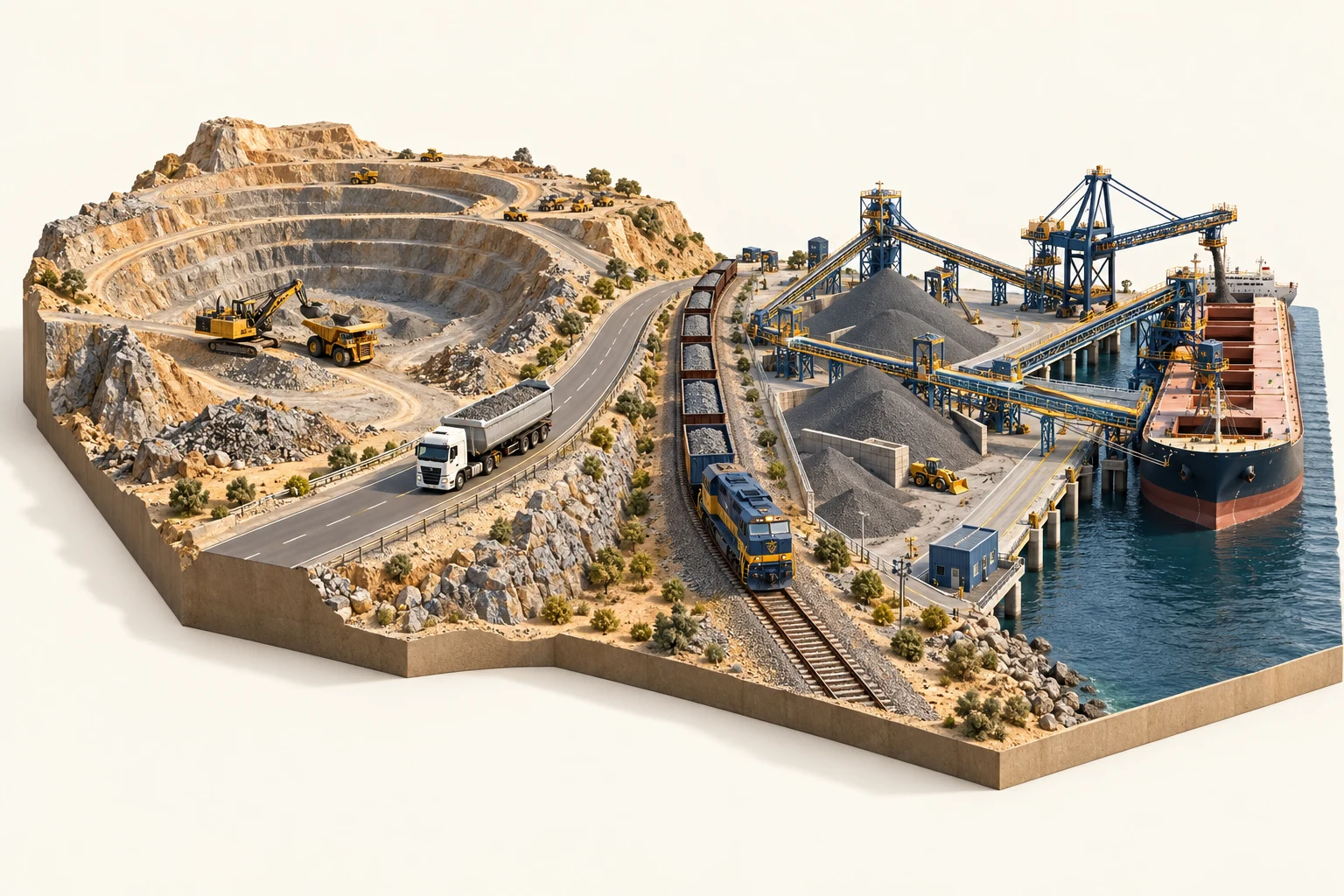 An illustrated journey · Select a checkpoint · Not a geographic map
A typical export journey.
Actual routing depends on the load.
The commodity, quantity, loading point and receiving destination must be clear. Mine access, loading windows and site requirements shape the movement before a truck is assigned.
A confirmed load instruction that mine, coordinator and carrier can all work from.
Road connects mines and receiving facilities. Rail can carry bulk volumes on suitable corridors, including coal to Richards Bay and iron ore to Saldanha. Access, capacity and terminal arrangements determine the route; not every load uses every mode.
Explore the rail network ↗We coordinate mines, verified fleet owners and established carrier networks around one clear movement. The right people. Written instructions. Agreed commercial terms.
Scroll through the checks that turn a possible load into a coordinated movement.
We source capacity through fleet owners and established carrier networks, then check the operator, truck documentation, insurance and driver requirements against the work.
Why it works The match is based on suitability and verification, not simply a phone number and an available truck.
Confirm the commodity, collection and delivery points, load requirements and responsible parties. A truck moves on a written agreement.
Why it works Everyone works from the same instruction, reducing assumptions at loading and delivery.
The rate is agreed per load, together with the payment basis and applicable terms, before dispatch. Route and load requirements inform the agreement.
Why it works The mine and carrier can make an informed decision before costs begin to accumulate.
We coordinate collection, delivery instructions and communication between the mine and transport partners. Where a load involves rail or export, receiving arrangements must align with the onward movement.
Why it works A named coordination point helps parties resolve changes instead of passing uncertainty down the chain.
Delivery records support reconciliation and invoicing. The paying party, recipient and payment terms are established in the written agreement, with settlement to the confirmed account.
Why it works A documented payment trail links completed work to the agreed obligation. Exact payment timing is confirmed for each arrangement.
Tell us where you fit. We’ll start with the requirements and work through the next step.
Share your commodity, collection point, destination, volumes and timing. We’ll assess the haulage requirement and suitable capacity.
Discuss a load ↗Share your fleet size, truck specification, operating area and availability. We’ll work through verification and suitable opportunities.
Partner your fleet ↗Enquiries open in your email app. Availability, suitability and terms are confirmed directly.
Founder · Strategy & partnerships
Co-founder · Administration & trade
Fleet management · Digital systems
Ore Industries also facilitates connections between mine owners, processing and plant specialists, contract mining partners, and investors. The role is to connect the right expertise and coordinate the commercial and logistical requirements. Discuss your project with James.